What HVAC Brand Should I Buy? Why the Installation Matters More
When investing in a new HVAC system, it is natural to ask, “What brand should I buy?”
The manufacturer matters. You want reliable, efficient equipment with strong warranty protection. However, even premium equipment can perform poorly when it is incorrectly sized or improperly installed.
The better question is:
Who will install the system, and what will they do to ensure it is installed correctly?
Start With the Contractor, Not the Brand
An HVAC system is more than the equipment outside your home. It includes the indoor equipment, ductwork, airflow, refrigerant, electrical components, controls, insulation, and the characteristics of the home itself. Every part must work together.
A qualified contractor should evaluate your home before recommending equipment. That evaluation should include:
- Completing a Manual J load calculation to determine the home’s actual heating and cooling needs
- Inspecting the ductwork for proper sizing, restrictions, damage, and leakage
- Measuring or evaluating airflow
- Discussing rooms that are consistently too hot or too cold
- Reviewing insulation, windows, sun exposure, and other characteristics of the home
- Asking about your comfort concerns, efficiency goals, and budget
Simply replacing an existing four-ton system with another four-ton system does not confirm that four tons is the correct capacity for the home.
Why Proper Sizing Matters
Bigger is not necessarily better when it comes to HVAC equipment.
An oversized system may cool the home quickly, but it can cycle on and off too frequently, waste energy, create temperature swings, and affect humidity control. An undersized system may run continuously and still struggle to maintain comfort during extreme weather.
A Manual J load calculation helps determine the appropriate system capacity using information about the home instead of assumptions or rules of thumb.
The goal is not to install the largest system possible. It is to install the right system for your home.
Are You Getting a Quality Installation?
Before selecting a contractor, ask how the entire installation will be handled, not just which equipment will be installed.
A reputable HVAC contractor should be able to explain:
- Whether the required permit will be obtained
- Whether the installation will receive the required inspection
- How the system will be properly sized
- Whether a Manual J load calculation will be completed
- How the ductwork and airflow will be evaluated
- Whether the indoor and outdoor equipment are properly matched
- How refrigerant levels, electrical components, airflow, and system performance will be tested
- Whether the equipment will be installed according to manufacturer specifications
- Who will register the equipment and explain the warranty
- What labor warranty and ongoing service support the contractor provides
Permits and inspections are not unnecessary paperwork. They provide an additional level of accountability and help verify that the installation complies with applicable building and safety codes.
Be cautious if a contractor avoids these questions, recommends equipment without evaluating the home, or provides a significantly lower price by leaving important steps out of the installation.
Does the HVAC Brand Still Matter?
Yes, but it should be considered after you have selected a qualified contractor and determined what your home needs.
Manufacturers differ in their:
- Product quality and available technology
- Efficiency ratings
- Comfort and control options
- Parts availability
- Warranty coverage
- Technical and contractor support
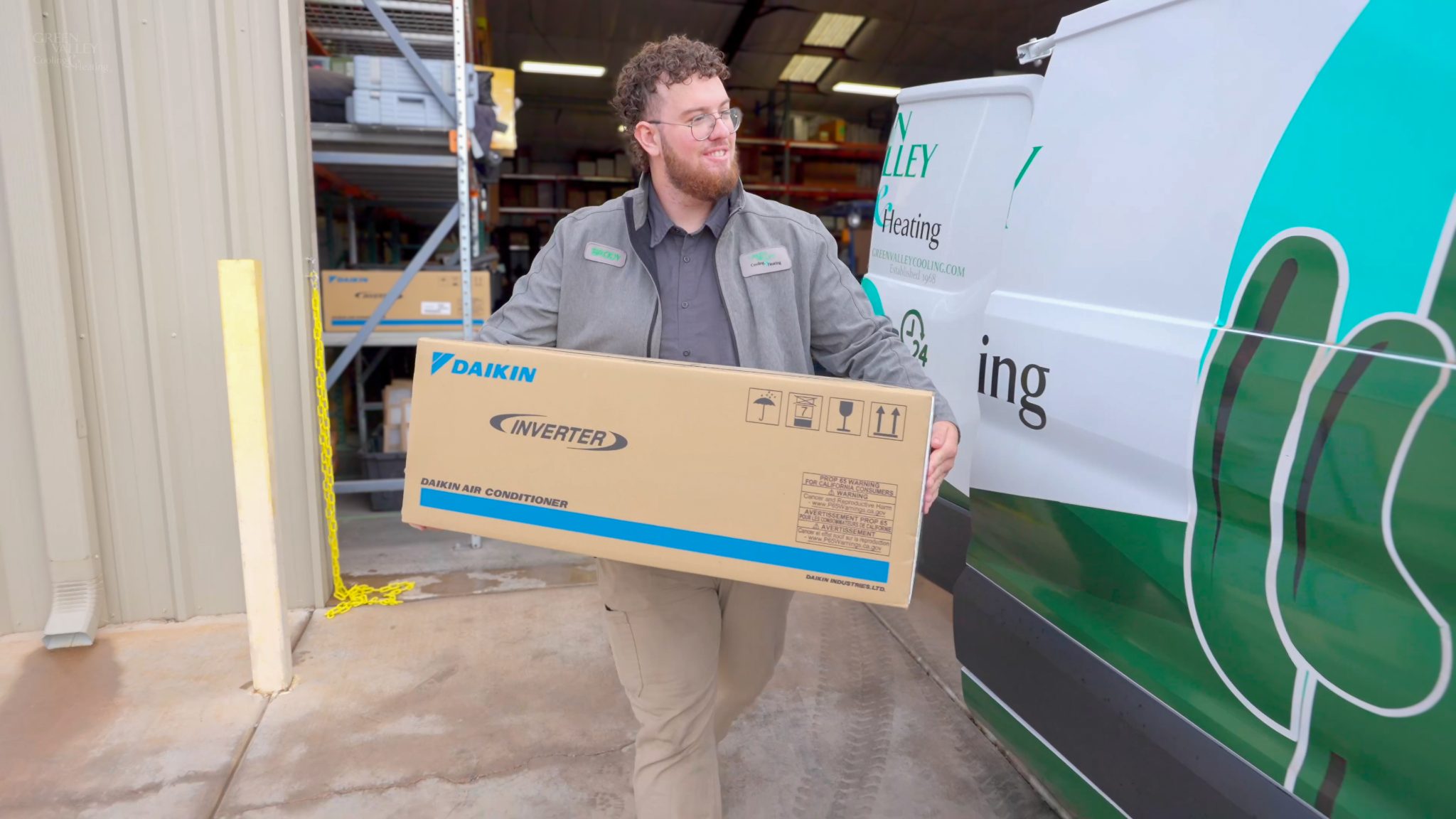
At Green Valley Cooling & Heating, we install and service a variety of HVAC equipment. Based on our experience, Daikin is a brand we confidently recommend when it is the right fit for the home and homeowner.
Why We Recommend Daikin
Daikin offers a broad selection of residential comfort solutions, including high-efficiency air conditioners, inverter-driven heat pumps, ductless systems, smart controls, and indoor air quality products.
Many Daikin residential systems also include 10- or 12-year limited parts warranties, depending on the specific equipment selected and applicable registration requirements. Some products offer additional unit-replacement or heat-exchanger coverage. Homeowners should always review the exact warranty terms for the system they are considering.
We also value Daikin’s extensive experience in HVAC engineering and technology, along with its significant manufacturing presence in the United States.
The Installation Is Not Finished When the System Turns On
A newly installed system should be thoroughly tested before the job is considered complete.
The contractor should verify that airflow, refrigerant charge, electrical components, controls, drainage, ductwork, and overall system operation meet the equipment manufacturer’s requirements.
A system can turn on and still not operate as efficiently, reliably, or comfortably as it should. Proper commissioning, the final testing and adjustment of the system, is an essential part of a quality installation.
The Best System Is the One Installed Correctly
Daikin is a brand we are proud to recommend, but homeowners should never select an HVAC system based on the name on the equipment alone.
Choose a contractor who will:
- Properly evaluate your home
- Complete the necessary load calculations
- Obtain required permits
- Inspect the ductwork and airflow
- Install the equipment according to manufacturer specifications
- Test and commission the completed system
- Stand behind the installation after the job is finished
The best HVAC system is one that is properly selected, correctly sized, professionally installed, thoroughly tested, and supported by a company you trust.
A quality brand is important. A quality installation is essential.
About the Author
Written by Green Valley Cooling & Heating
Technical Review: Erik Springsteen, Technical Trainer

Erik Springsteen has nearly 20 years of experience in the HVAC industry and has been with Green Valley Cooling & Heating for more than 12 years. As our Technical Trainer, Erik helps train HVAC professionals through our Technical Academy and specializes in HVAC diagnostics, installation, energy efficiency, airflow, and building performance.
He holds Building Analyst Technician and Building Analyst Professional certifications through the Building Performance Institute (BPI), along with NATE certifications in air conditioning service and installation and air-to-air heat pump service and installation.